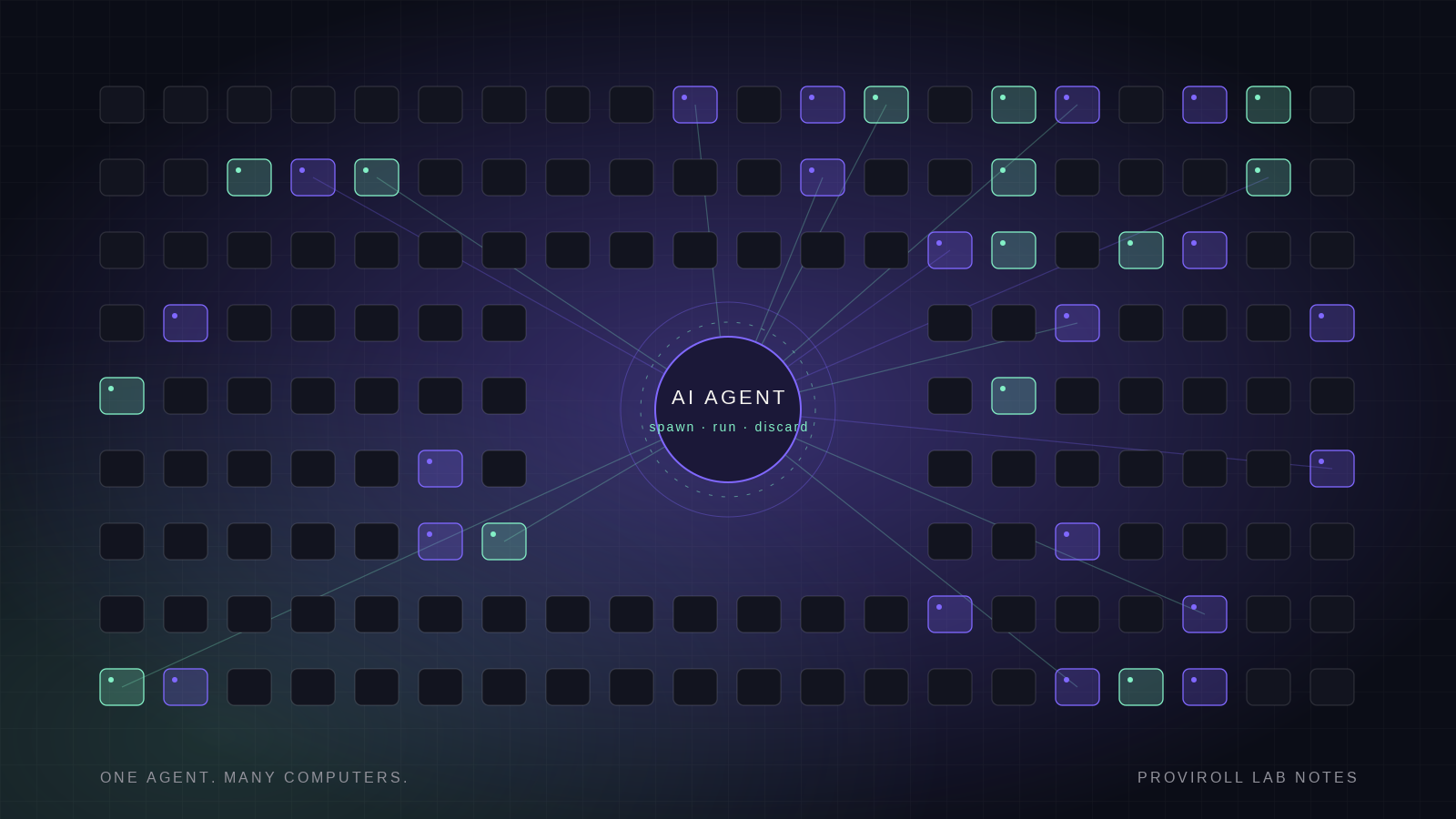
A year ago, most AI agents could only talk. In 2026 they increasingly act: they write and run code, analyse files, browse the web and operate software on our behalf.
To do any of that safely, an agent needs a computer of its own. Not your laptop, not your production server, but an isolated, instant and disposable environment where it can work without putting anything else at risk. The industry calls these sandboxes, and this year they became one of the fastest-growing layers in AI infrastructure.
The numbers behind the shift
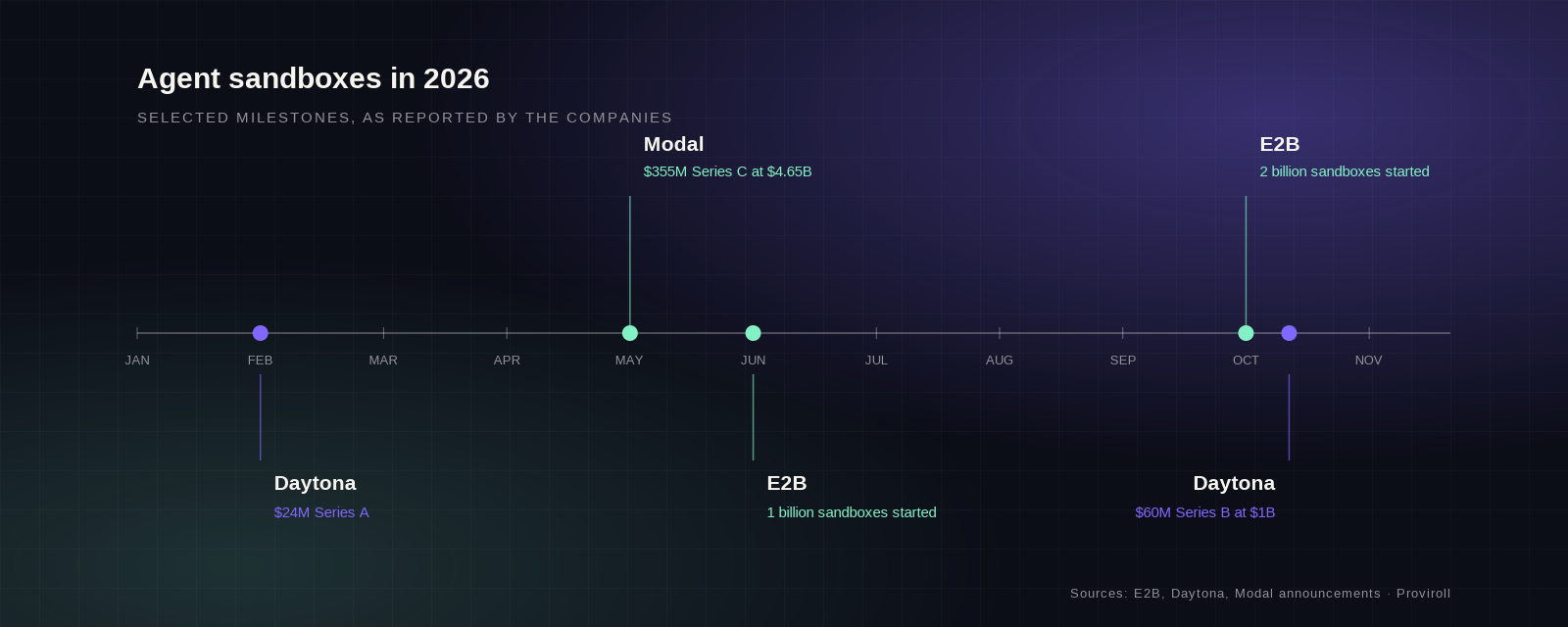
E2B, one of the earliest companies in the space, says it crossed one billion sandbox launches in June 2026 and two billion by October, with 94 of the Fortune 100 signed up. Those launches span coding agents, data analysis, computer use and reinforcement-learning training runs.
Daytona raised a $24M Series A in February led by FirstMark. In October it followed with a $60M Series B at a $1B valuation, reporting that revenue had grown roughly 25 times since January.
Modal, whose sandboxes sit alongside its serverless GPUs, raised a $355M Series C at a $4.65B valuation in May. Reuters reported it was generating about $300M in annualised revenue at the time.
Why agents need sandboxes
Code written by a model is, by definition, code nobody has reviewed. Running it safely comes down to a few properties:
- Isolation. Each agent works in its own environment, usually a lightweight virtual machine, so a mistake cannot spill into anything else.
- Speed. Agents start and stop environments constantly. A sandbox has to be ready in well under a second to keep the agent responsive.
- Disposability. Most sandboxes live for seconds or minutes, then disappear along with anything the agent left behind.
- Persistence, when it matters. Longer tasks need to pause, resume and keep their files.
- Network control. Teams decide exactly what an agent is allowed to reach on the internet and inside their own systems.
A crowded, fast-moving field
Specialists such as E2B and Daytona now compete with general platforms that added sandboxes of their own, including Modal, Vercel and Cloudflare. Agent frameworks are plugging them in directly: the OpenAI Agents SDK, for example, documents several hosted sandbox providers side by side.
That much competition is good news for builders, with falling prices and fast-improving start-up times. It also means consolidation is coming. Not every provider will still be here in two years.
What we take from it
Sandboxes are on their way to becoming as standard as databases: a piece of infrastructure every AI product needs and few teams should build from scratch. When we help teams choose, we look at five things:
- The isolation model, and whether it matches the risk of the code being run.
- Start-up time under real load, not on a benchmark slide.
- Pricing per second, and how it behaves at your expected volume.
- Where it runs: managed cloud, your own cloud account, or both.
- The exit path, so switching providers is a configuration change rather than a rewrite.
The agents are getting more capable every month. The teams that win will be the ones who give them a safe place to work.